Quiet Luxury at Home: Simple Elegance, Natural Materials and Spaces That Feel Calm
Quiet luxury has become one of the most appealing approaches to interior design for those looking to create elegant homes without excessive decoration or visual noise. Rather than relying on statement pieces or obvious displays of luxury, this style focuses on quality, timelessness, comfort and carefully considered details.
The result is a home that feels sophisticated without being formal, warm without being overloaded, and elegant without trying too hard.
In 2026, interior design is increasingly moving towards more personal, warmer and more tactile spaces. Natural materials, craftsmanship, layered textures and a stronger connection with wellbeing are playing an increasingly important role in contemporary interiors.
Quiet luxury fits perfectly within this evolution: it is less about showing what you have and more about creating a space where you genuinely enjoy living.
What does quiet luxury mean in interior design?
Quiet luxury is based on a simple idea: elegance does not need to be obvious.
Instead of filling a room with decorative objects, contrasting colours or recognisable designer pieces, the focus is placed on proportion, materials, textures and atmosphere.
A quiet luxury interior might combine a neutral colour palette with natural wood, stone, linen, wool or brushed metal. The furniture tends to have simple silhouettes, while carefully selected lighting and accessories add warmth and personality.
The aim is not to create a showroom, but a home that feels comfortable, coherent and timeless.
The new luxury is warmer
One of the most noticeable developments in contemporary interiors is the move away from cool, minimalist spaces towards warmer and more inviting environments.
Creams, beige, taupe and off-white remain useful as a base, but they are increasingly combined with deeper tones such as chocolate brown, ochre, terracotta or burgundy. These colours add depth without overwhelming the room.
Warm neutrals can also make a space feel more intimate and sophisticated, particularly when combined with different textures and natural materials.
The result is a home that feels calm during the day and atmospheric in the evening.
Natural materials as the foundation
Materials are one of the defining elements of quiet luxury.
Wood, stone, linen, wool, rattan and other natural or tactile materials can bring a sense of authenticity to an interior. Rather than competing with each other, they create a layered environment in which every element contributes to the overall feeling.
Natural stone can introduce character into a kitchen or bathroom. Linen curtains can soften large windows, while wool rugs and wooden furniture can make living spaces feel warmer.
The key is not to use expensive materials everywhere, but to choose them carefully where they will have the greatest impact.
Wood becomes the protagonist
Wood is particularly well suited to quiet luxury because it brings warmth, texture and a connection with nature.
Natural or lightly finished wood can be used for flooring, furniture, wall details, shelving or kitchen cabinetry. Its natural variations also prevent neutral interiors from feeling too uniform.
In Mediterranean homes, this approach works especially well. Wood can be combined with stone, natural fibres and soft colours to create interiors that feel contemporary while remaining connected to their surroundings.
Textiles that add warmth
If materials provide the foundation, textiles provide comfort.
Curtains, cushions, blankets, upholstered furniture and rugs are essential for creating a softer atmosphere. Rather than introducing multiple patterns, quiet luxury tends to rely on texture.
Linen, cotton, wool, boucle and other tactile fabrics can create visual interest without adding unnecessary complexity.
Earthy shades work particularly well: sand, beige, caramel, warm grey, olive and brown can all contribute to a sophisticated but relaxed palette.
Lighting is part of the architecture
Lighting can completely transform the perception of a room.
In a quiet luxury interior, warm and adjustable lighting helps create different atmospheres throughout the day. Instead of relying exclusively on a central ceiling light, it is often better to combine several sources: floor lamps, table lamps, wall lights and discreet architectural lighting.
Simple, sculptural fixtures can also become decorative elements in their own right.
The objective is not to illuminate everything equally, but to highlight textures, architectural features and key pieces while creating a welcoming atmosphere.
Fewer patterns, more texture
Quiet luxury does not necessarily mean a completely plain interior. The difference lies in how visual interest is created.
Instead of combining numerous prints, the focus can shift towards relief, fabric, natural grain and subtle variations in colour.
A textured rug, a linen curtain, a stone surface or a handcrafted ceramic piece can add character without making the room feel busy.
If you want to introduce a pattern, one carefully selected element can often be enough: perhaps a discreet wallpaper, a subtle geometric rug or a decorative cushion.
Organic shapes soften the space
Although quiet luxury often relies on simple forms, this does not mean that every piece needs to have sharp, rigid lines.
Rounded sofas, curved armchairs, oval tables and softly shaped accessories can introduce a sense of movement and comfort.
Organic forms are particularly effective when combined with natural materials, helping interiors feel more relaxed and human.
The value of leaving space
One of the most important principles of quiet luxury is knowing what not to add.
A room does not need to be completely filled to feel finished. Allowing some empty space between pieces of furniture can make the architecture more noticeable and give individual objects greater visual importance.
This also creates a more practical environment. When every piece has a purpose, the home becomes easier to use and easier to maintain.
How to bring quiet luxury into a Mediterranean home
Mediterranean properties provide an ideal setting for this style.
Large windows, terraces, natural light and connections with outdoor spaces already provide many of the elements that quiet luxury seeks to enhance.
A neutral interior can be complemented by natural wood, limestone, linen curtains and soft textiles. Outside, simple furniture, natural fibres and understated landscaping can create a seamless transition between the home and its surroundings.
The colour palette can also reflect the Mediterranean environment: warm whites, sand, stone, olive, terracotta and muted earthy tones.
The result is an interior that feels contemporary but not disconnected from its location.
Mixing old and new
Quiet luxury does not require everything in a home to be new.
In fact, combining contemporary furniture with vintage pieces, inherited objects or handcrafted elements can give a space much more personality.
A modern sofa alongside an antique wooden table, for example, can create a more interesting composition than a room where every piece belongs to the same collection.
The small imperfections of natural and aged materials can also make an interior feel more authentic.
Quality before quantity
Perhaps the simplest way to understand quiet luxury is through the principle of quality before quantity.
Rather than buying many decorative pieces, the idea is to invest in fewer items that are well made, comfortable and capable of lasting over time.
This could mean choosing a high-quality sofa, a solid wood dining table, natural stone worktops or carefully made lighting.
The result is not necessarily a more expensive home. It is a more intentional one.
Quiet luxury does not mean a cold home
One of the misconceptions surrounding minimalist luxury is that it has to feel impersonal.
Quite the opposite.
The combination of warm colours, natural materials, soft lighting, comfortable furniture and personal objects can create interiors that are both sophisticated and deeply welcoming.
The most successful quiet luxury spaces are not designed to impress visitors. They are designed to make the people who live there feel comfortable.
Architecture and lifestyle with Taylor Wimpey Spain
For a home to feel truly harmonious, interior design and architecture need to work together.
At Taylor Wimpey Spain, contemporary homes are designed with a strong connection to their surroundings and to the Mediterranean way of life. Natural light, open spaces, terraces and outdoor areas can provide the foundation for interiors where simplicity and comfort become part of everyday living.
This makes quiet luxury more than a decorative trend. It can become a way of thinking about the home: choosing quality, creating calm and making the most of the space around you.
Luxury as living better
Ultimately, quiet luxury is not about having more. It is about living better with what you choose to have.
A beautiful home does not need to be spectacular at first sight. Sometimes its greatest quality is the feeling it creates when you walk through the door: calm, comfortable and completely at ease.
Natural materials, warm colours, thoughtful lighting and carefully selected pieces can transform an interior into a place that feels timeless and personal.
Because the most sophisticated home is often the one that does not need to draw attention to itself to feel special.
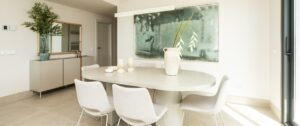
Bright living room at the new homes at Altura 160, in Benahavis